
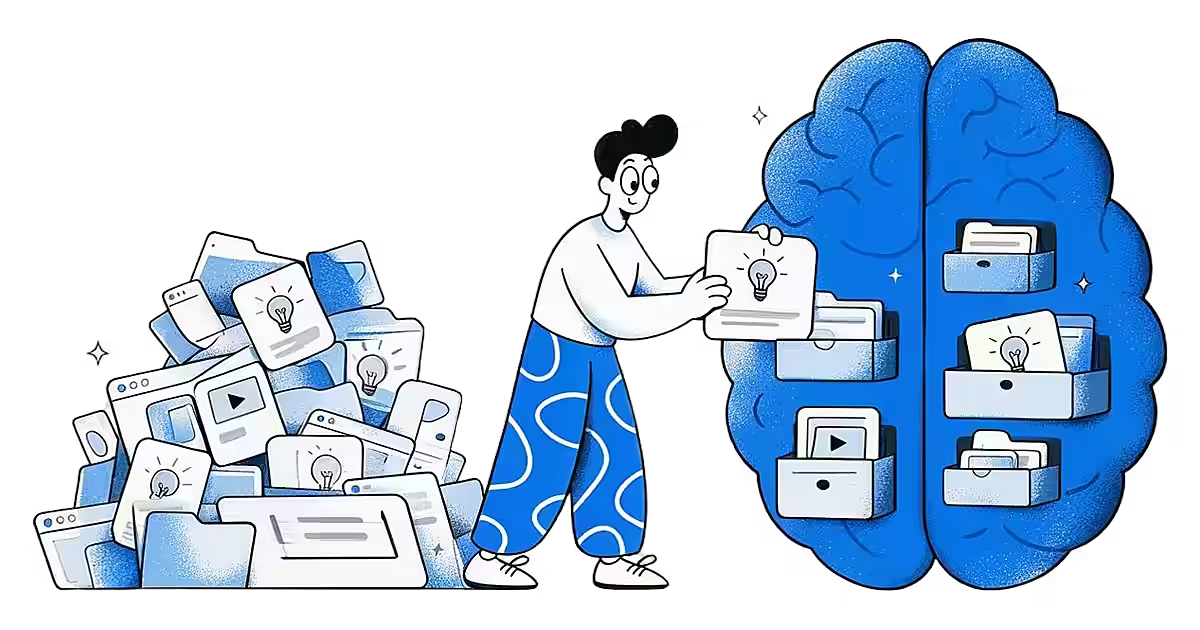
Ideafex saves posts, articles and videos from any app to one searchable wall. Free on the App Store and Google Play.

What is a second brain?
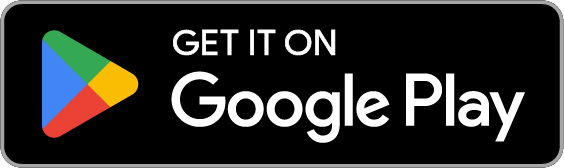
Your first brain is good at having ideas and poor at storing them. A second brain is the trusted place you put everything worth keeping, so you can stop trying to remember it all. The phrase was popularised by productivity writer Tiago Forte through his course and 2022 book Building a Second Brain, though people have kept commonplace books, card files and notebooks for centuries.
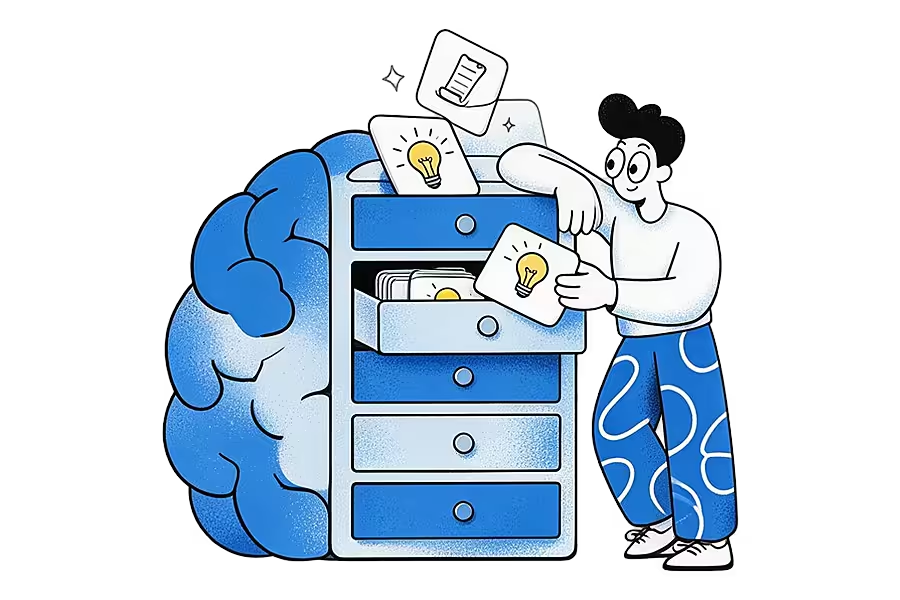
A second brain is a habit more than a product. The tool can be a paper notebook, Apple Notes, Notion, Obsidian or a saving app. What makes it a second brain is that you use it consistently, you trust it, and you return to it when you need to think, write or decide.
The phrase sounds grand, but most working second brains are modest: a handful of folders, a search box and the habit of keeping the source with everything you save. You do not need a perfect system to start getting value from one.
How does a second brain work?
Forte describes four steps, which he calls CODE (Forte Labs overview):
- Capture: keep what resonates, such as a quote, an article, a video, a voice memo or your own thought.
- Organise: sort it by where it will be useful, not by where it came from.
- Distil: pull out the essence, for example by highlighting or summarising in your own words.
- Express: use it to make something, such as an essay, a talk, a plan or a decision.
For the organising step he suggests a simple structure called PARA: four top-level folders for Projects, Areas, Resources and Archives (The PARA method):
- Projects have a deadline
- Areas are ongoing responsibilities
- Resources are topics of interest
- Archives hold anything inactive
Plenty of people use their own folders instead; the point is to have a structure light enough that you keep using it.
An example
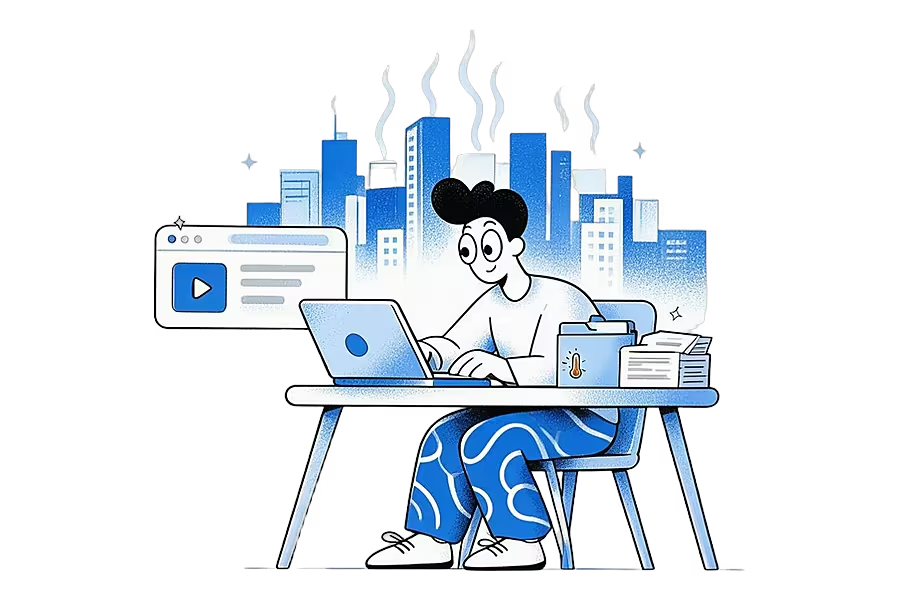
A master's student is writing a thesis on urban heat. Over a term she saves papers, a few news articles, two YouTube lectures, a Reddit thread from city planners and her own notes after supervisor meetings. All of it goes into one place, filed under a folder for the thesis. When she sits down to write a chapter, she searches for "tree cover" and finds the paper, the lecture and her note side by side, instead of digging through browser tabs and screenshots. For more on that kind of work, see Ideafex for students and researchers.
Can software be a second brain?
Software can hold the material, but the second brain is still the habit of capturing, sorting and using it. What newer tools add is a way to ask questions of what you kept, for example by letting an assistant such as Claude read your saves through an MCP server. We cover that setup step by step in how to build an AI second brain.
Is a second brain worth it?
It depends on how often you go back to what you read or watch. Students, writers, researchers and makers who produce work from ideas tend to get the most out of one. If you rarely look anything up again, a large system will feel like homework.
A cheap way to find out is a one-project trial. Pick something with a deadline, such as an essay, a talk or a trip, and keep everything for it in one place for a month. At the end, ask yourself three questions:
- Did you find something you would otherwise have lost or had to search the web for again?
- Did you reuse a quote, source or idea in the finished work?
- Did the upkeep take less time than it saved you?
Two or three yes answers suggest the habit will pay off, and you can widen it to other projects. If the answers are no, a simpler setup, such as one notes file per project, may be all you need. Whatever you try, keep the source with every item so you can check it and credit it later.
Which app should you use for a second brain?
It depends on where your ideas come from and what you do with them:
- Writing-heavy people often pick Notion or Obsidian.
- People who mostly save articles lean towards read-it-later apps or Readwise.
- People who save from social apps and video want something that captures from a phone in one tap.
Our comparisons of Ideafex and mymind and Ideafex and Readwise go through the trade-offs honestly, and many people pair a capture app with a writing app.
How Ideafex relates
Ideafex covers the capture end of a second brain. You tap Share in Instagram, TikTok, Reddit, a browser or any other app, pick Ideafex, and the idea is saved with its source, even offline. Ideas sit on one searchable wall in nested folders, and on Pro Ideafex also keeps article text and video transcripts where it can fetch them, so search finds what was said. It is not a writing workspace with backlinks or long documents, so if you distil and write a lot, you may keep Notion or Obsidian alongside it. With Pro, Connect your AI lets your assistant search those ideas, read-only.
Related terms
- Personal knowledge management (PKM): the wider practice a second brain belongs to.
- Read it later: a narrower habit focused on articles.
- Web clipper: one way to capture pages into a second brain.
Sources
- Tiago Forte, Building a Second Brain
- Forte Labs, Building a Second Brain: the definitive introductory guide
- Forte Labs, The PARA method
Quick answers
It is a trusted place outside your head, often an app, where you keep ideas, sources and notes so you can find and reuse them later instead of trying to remember everything.
An app can hold your second brain, but the habit of capturing, sorting and reusing what you keep is what makes it work. Some apps also let an AI assistant search what you saved.
Try it on one project with a deadline for a month. If you found or reused things you would otherwise have lost, and the upkeep took less time than it saved, it is worth widening.
Tiago Forte popularised the term through his Building a Second Brain course and 2022 book, which teaches the CODE steps and the PARA folder structure.
Save it once, find it later
Save posts, articles and videos from any app to one searchable wall. Ideafex is free on the App Store, Google Play and the web at app.ideafex.si.
Related terms and reading
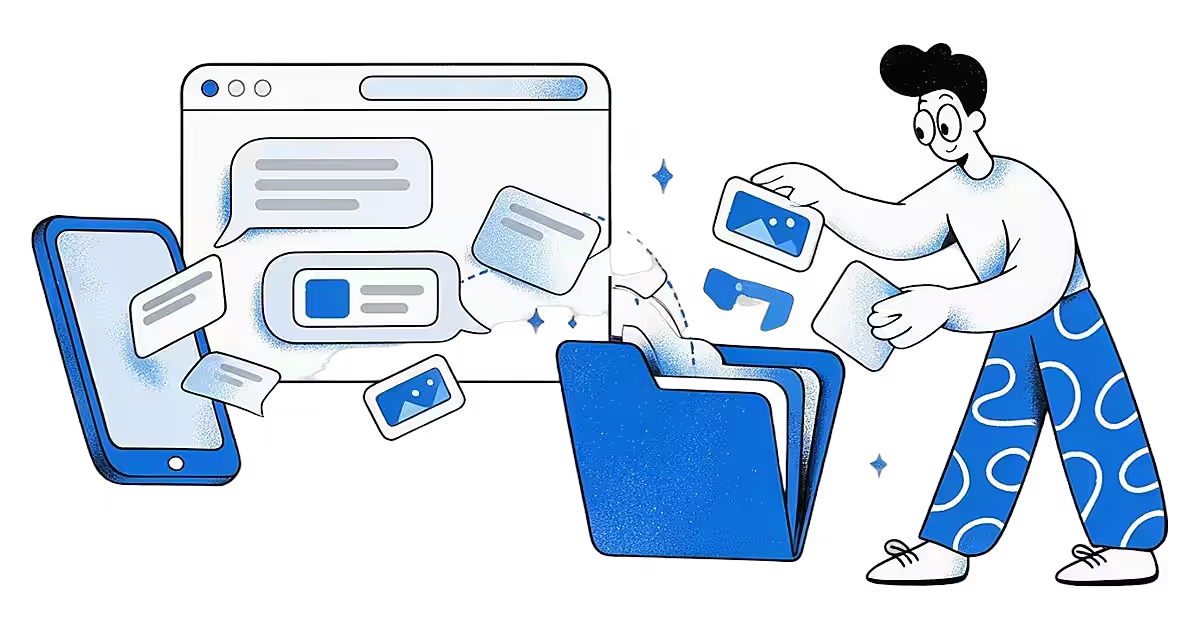
A second brain AI can read: use Claude with what you save
Turn the posts, articles and videos you save into a second brain that Claude, ChatGPT or Cursor can search and read, with read-only access you approve.
Read more →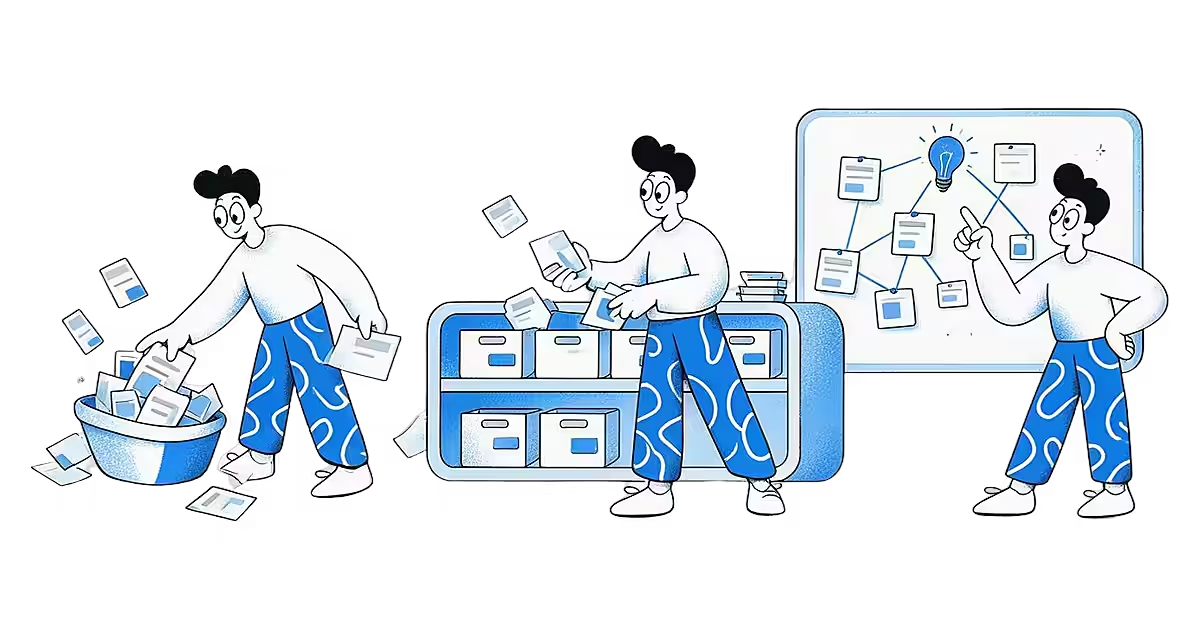
What Is Personal Knowledge Management (PKM)?
The practice of collecting, organising and making sense of what you learn, with your own habits and tools.
Read more →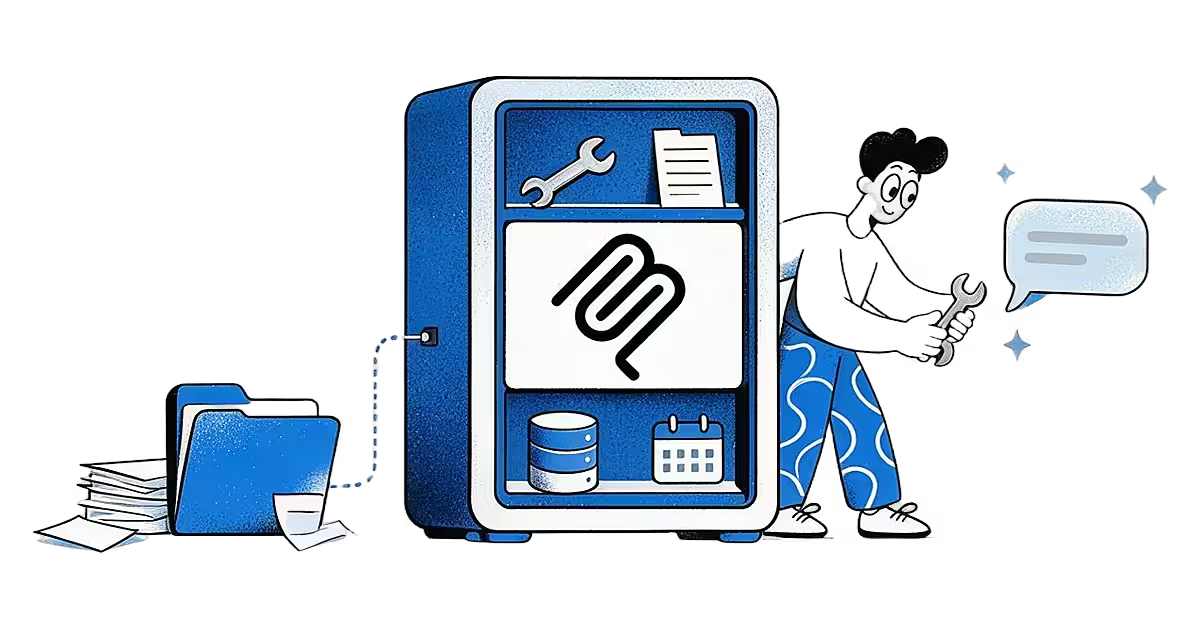
What Is an MCP Server? A Plain-English Explanation
A program that lets AI assistants such as Claude and ChatGPT use outside tools and data through one open standard.
Read more →